A Rainy Afternoon, One Room, Three Ways to Watch
A rainy afternoon film plan for noticing how one room changes across scenes, so objects, rearrangements, and frame entrances become part of the story.
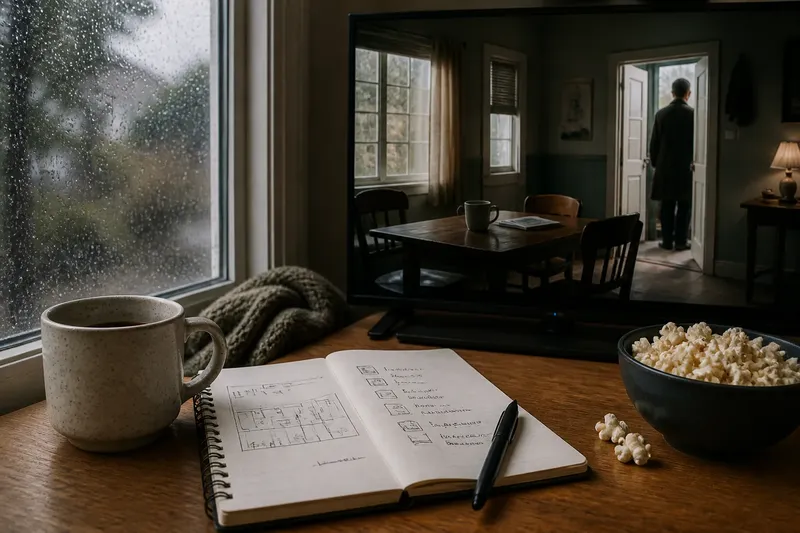
Rain ticks against the window while you settle in with a film that returns to the same room. Try a rainy afternoon viewing plan: watch the room three times, giving each pass a different job. You do not need to pause constantly or take formal notes; a scrap of paper and a little curiosity will do.
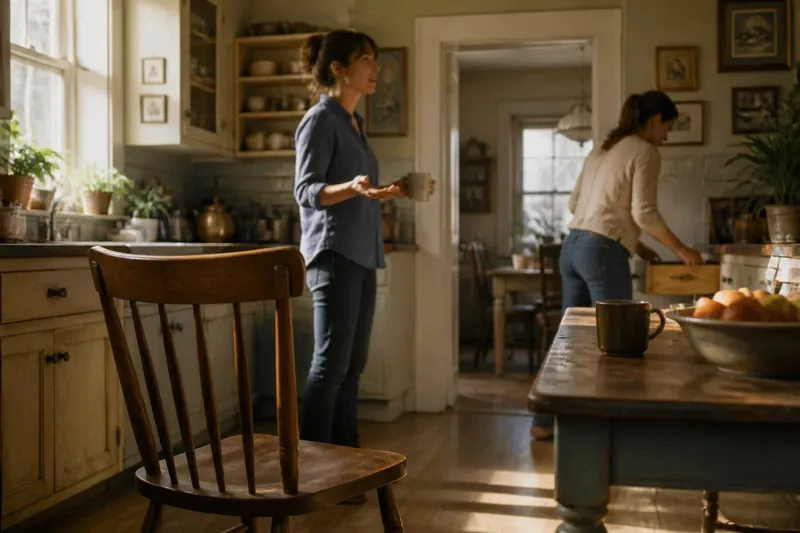
The point is not to decode every prop as a secret symbol. Instead, notice how the room’s ordinary details shift with the scene: a cup left behind, a chair turned toward the door, or a person appearing at the edge of the frame. Taken together, such changes can make one location feel newly charged without changing its walls.
Set up a relaxed three-pass afternoon
Choose a film you can watch without rushing to another task. A familiar film can make small changes easier to catch, though a first viewing works too if you are happy to watch again. Keep a notebook or a notes app nearby, but leave it closed during the opening stretch.
Give the afternoon a simple rhythm:
- First pass: watch the film as a story, with no special assignment.
- Short pause: jot down the room or scene that stayed with you.
- Second pass: follow objects and how they move or disappear.
- Another pause: record any arrangement that seems different.
- Third pass: watch the frame edges and what enters or leaves.
- Last few minutes: compare your notes and choose one change that affects your reading of the scene.
You can spread the passes across a weekend if the film is long or your attention is better in shorter sessions. The plan is a way to look, not homework; stop once the viewing feels more like bookkeeping than pleasure.
Let the first pass establish the room
On the first viewing, follow the emotional and dramatic movement. Which moments in the room feel calm, tense, private, or exposed? Notice where the characters gather and where they avoid looking, but do not try to explain every choice yet.
Afterward, make a quick room map from memory. A rough rectangle is enough. Mark the door, window, table, prominent chair, and any other feature you remember; add question marks where your memory is hazy. This sketch gives you a baseline for later passes without turning the exercise into a test of recall.
Say you remember a kitchen table near the center of the scene, but cannot recall whether the back door was visible. On the next pass, check the frame rather than guessing. The observable result might be a clearer sense of whether the character has an open route out or is visually boxed in by the composition.
Use the second pass to follow objects
Pick a few objects that recur: a mug, coat, stack of mail, lamp, or bowl of fruit. Track where each appears, who handles it, and whether it is moved between scenes. A simple note such as “mug by sink, then on table” is enough to keep your attention anchored.
Separate a visible change from an interpretation. “The coat is no longer on the hook” is an observation; “someone left in anger” is a possible reading. Keep both if useful, but mark the second as a guess. The next scene may support it, complicate it, or leave the cause unknown.
Pay attention to how an object’s practical use affects the room. A lamp switched on can gather attention around one side of a space; a bag placed on a chair can make that seat seem unavailable. The object need not carry a universal meaning to alter what the scene lets you notice.
Imagine a character entering a living room where a newspaper lies open on the table. Later, the paper is folded and pushed aside while another character takes the same seat. You might note that the surface has been cleared for a conversation, then check whether the changed arrangement makes the exchange feel more direct. That reading comes from the scene, not from a fixed meaning assigned to newspapers.
Watch how the room is rearranged
On the second pass, look beyond individual props and notice relationships between them. Is a chair angled toward the doorway or toward another person? Does a table divide the characters, give them something to share, or sit unused at the edge of the action?
Compare arrangements only when the film gives you a useful point of comparison: the same camera position, the same area of the room, or a similar conversation. A different angle can make furniture seem to shift when the room itself has not changed. Let the image tell you what is actually visible before deciding that an object has been moved.
Think of the room like a table setting: moving one plate can change who seems included, even though the table stays put. In a film, a chair pulled closer may change the apparent distance between characters. The effect depends on blocking, camera placement, and the moment in the story, so note the arrangement before settling on what it suggests.
Give the third pass to the frame edges
In the final pass, resist watching only the actors’ faces. Look toward doors, hallways, windows, mirrors, and the margins of the image. Ask what comes into view, what remains outside, and whether the camera lets you see an arrival before the characters react.
Notice the timing of an entrance. Someone crossing the threshold can interrupt a private exchange; a figure visible in a mirror may make the same room feel less private without anyone opening the door. A sound from off-screen can also direct your attention toward a space the camera withholds.
Write down what the frame shows before describing its effect. “A second person appears behind the seated character” is more precise than “the room feels crowded.” Then ask what the scene’s staging makes you expect: a confrontation, a pause, or no immediate response at all.
What should you notice when the room returns?
Do I need to pause after every scene?
No. Let scenes play, and pause only at a natural break or when you want to preserve a detail. Constant stopping can flatten the film’s rhythm and make the room feel like an inventory rather than part of a story.
What if I cannot remember where an object was?
Check the scene again instead of filling the gap from memory. If the camera does not show the relevant area, record that the object’s position is unclear rather than treating an assumption as a fact.
Should every change have a symbolic meaning?
No. A cup may be moved simply because a character needs the table, while the movement still changes the image’s balance. Start with the practical action and consider a larger reading only if other scene details support it.
Can I use this plan with a first-time viewing?
Yes, though the first pass may leave you with fewer notes about the room. Follow the story first, then revisit a scene that stays with you and use the later passes to check its objects, arrangement, and entrances.
Finish with one grounded observation
At the end, look at your notes and choose one change that is clearly visible and useful to your reading of the film. It might be a chair moved closer to the doorway, a familiar object missing after an argument, or a person appearing in a mirror before the camera shows them directly.
Write one sentence that links the detail to the scene without claiming more than the image supports: “The cleared table leaves the characters facing one another without an object between them.” That is a satisfying place to stop. The rainy afternoon film plan works best when it sends you back to the story with a sharper eye, not a list of symbols you feel obliged to solve.