Built Room or Real Location: What Each Lets a Film Control
Built room or real location: see how sets and existing spaces shape camera access, detail, continuity, and the visual choices a film can sustain.
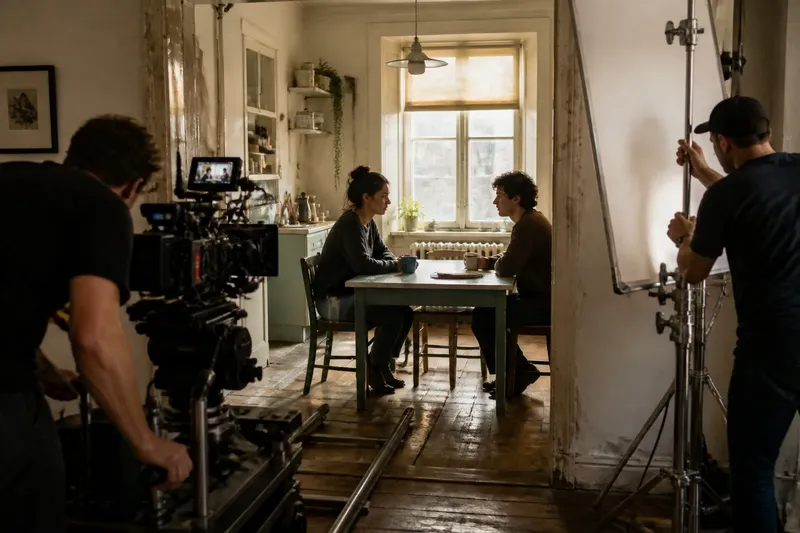
A narrow hallway can look generous from the doorway and collapse into a cramped strip as soon as a camera enters. In film production design, choosing a built room or a real location is a choice about what the camera can reach, what the crew can change, and which details can stay consistent from shot to shot.
Neither option is automatically more convincing. A constructed set offers deliberate access and adjustable surroundings; an existing place brings proportions, wear, and practical limits that may be difficult to reproduce. The useful question is not which one looks more authentic, but which kind of control the scene needs.
Built rooms give the camera room to work
A set can be designed around the scene rather than adapted to an existing floor plan. Walls may be removable, a ceiling can be left open, and a window can sit exactly where the composition needs it. That freedom matters when a character must cross a room while the camera moves alongside them.
The gain is not simply more space. The production team can decide where a doorway lands in the frame, whether a wall catches a soft reflection, and how much background remains visible behind an actor. Those decisions can make a modest stage feel like a believable apartment, shop, or office from the angles the story uses.
Think of a built room like a cabinet made to fit a particular alcove: its dimensions serve a purpose, but they are not neutral. A deliberately shallow room may suit a frontal conversation and frustrate a long tracking shot. Set design works best when the intended camera positions are considered alongside the room’s story function.
That planning reaches into small practical details. A lamp might need to be placed where its shade reads clearly without blocking a face; a door may need to swing toward a camera mark; a desk may need a hidden opening for a lens. These choices help the scene play, but they can make the space less usable from an unplanned angle.
Real locations bring details no drawing can quite summon
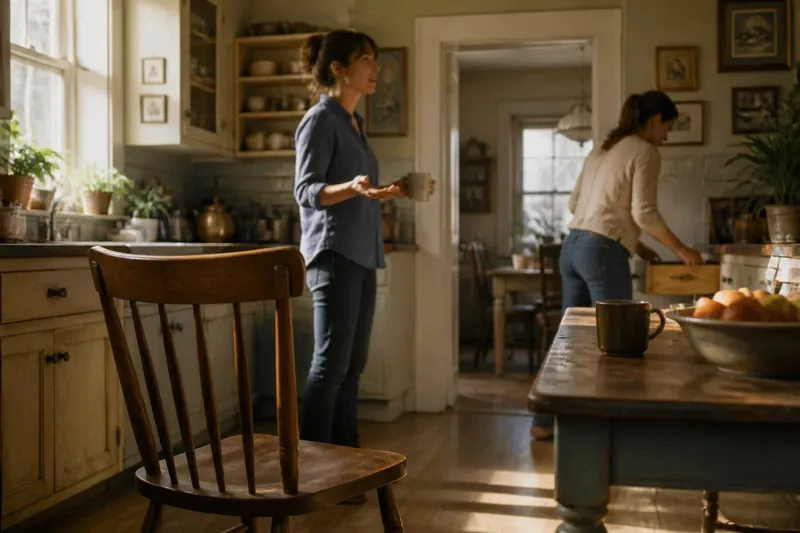
An existing location arrives with its own surface history: scuffed paint, uneven floors, a radiator under the window, or a doorway placed slightly off center. Such details can make a setting feel inhabited before the art department adds anything. A carefully chosen laundromat or back room can carry a social texture that would take time and attention to build on a stage.
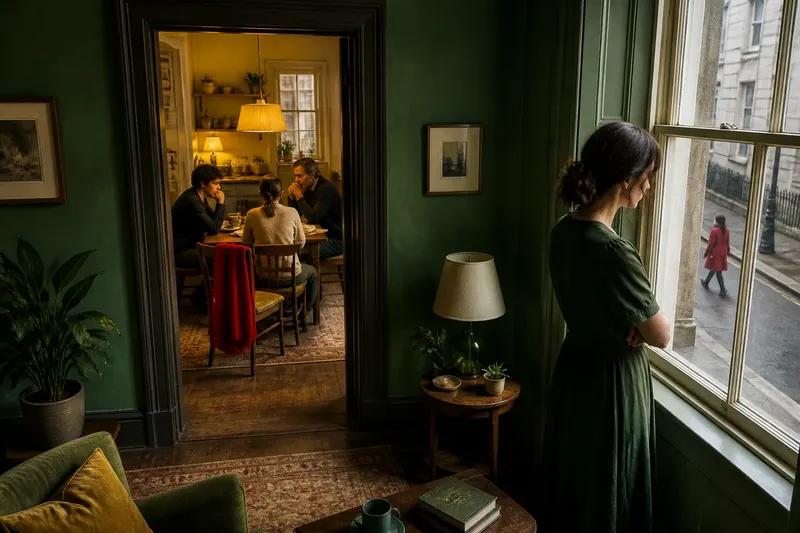
The location’s proportions also influence performance. A low ceiling can make a character seem boxed in; a broad storefront window can leave them exposed to the street. These effects are not just decoration. They can shape blocking, eyelines, and the distance characters keep from one another.
But a real place brings conditions the crew does not fully command. A neighboring business may create sound, daylight can shift, and a narrow stairwell may limit equipment placement. The location may look excellent from one side while offering no practical position for the reverse shot. Scouting should therefore include the views a scene needs, not only the attractive first impression.
Some locations also contain visual clutter that competes with the story: bright signs, distinctive fixtures, or contemporary objects that do not fit the film’s setting. Removing or concealing them may require permission, extra dressing, or a different camera angle. The production designer’s task is to decide which existing features contribute character and which draw attention for the wrong reason.
Continuity depends on what can be repeated
Visual consistency is easier to protect when a room can be reset. On a set, furniture, props, and practical lights can be marked and returned to their positions, while walls can be adjusted if a later setup needs a different view. This is especially useful when a scene is filmed out of story order or across several shooting periods.
A location can make that repetition harder. A shop may be open to the public between filming sessions, a rented room may need to return to its original condition, or a doorway may be shared with other activity. Even ordinary changes—a chair moved by a visitor or a curtain pulled differently—can show up across coverage if nobody records the room carefully.
Useful continuity records need not be elaborate. A set or location photo from each camera direction can show where the chair sits, which way a book faces, and how a coat hangs. Notes about practical lamps and window coverings help the crew recreate the visual arrangement without relying on memory alone.
Say a scene begins with a blue ceramic mug beside a character’s right hand, then cuts to a closer view after the character has moved it. If the close-up is filmed later, a continuity photo and a clear note about the mug’s new position give the crew a straightforward reference. The observable result should be that the cut feels like one continuous moment rather than a small jump in the room’s arrangement.
A set does not erase continuity work, and a location does not make it impossible. The difference is how much of the environment can be reset directly. When the room itself can change, production design has another tool; when it cannot, records and careful scheduling become more valuable.
Choose the space by the scene’s demands
Start with the action, not the label “set” or “location.” A scene built around a character listening unseen from behind a partition may need a wall that can be opened for the camera. A quiet exchange at a weathered kitchen table may gain more from a real home’s worn surfaces than from a newly dressed stage.
Then consider the camera’s path. A set can make room for a dolly, a boom, or a lighting fixture just beyond the frame. A real location may offer an appealing natural route for a handheld camera, but a tight doorway or fragile floor could constrain how the crew uses it. The design decision should account for the shot’s full movement, not just its starting composition.
Sound and light can change the balance, too. A controlled stage may reduce interruptions and let the team shape light without depending on the time of day. A location may provide useful ambient sound or daylight, yet those conditions can vary between setups. The director, cinematographer, production designer, and location team need to weigh those needs together.
Imagine a story set in a small neighborhood clinic. If the scene requires a camera to move from reception through a corridor into an examination room, a built set could connect those spaces and allow walls to open for coverage. If the central moment depends on the recognizable wear of an actual clinic waiting room, a location might provide that texture, while the production adapts the scene to its available angles. The expected visible difference is clear: one choice favors planned camera access; the other preserves the specific character of a real place.
What should guide the choice?
When is a built room the better choice?
A built room is useful when the scene needs unusual camera access, repeated resets, or architectural features designed around blocking. It can also help when the story requires a space that would be difficult to find in a suitable, filmable location.
When does a real location add the most?
A location is especially valuable when its existing proportions, materials, or signs of use contribute to the scene’s identity. It may also be the more direct option when the story depends on a distinctive place that would feel artificial if recreated.
Can a film combine a set and a location?
Yes. A production might film an exterior at a real building and construct an interior that matches its doors, trim, and window placement. Matching visible details helps the transition feel coherent, while the set provides access that the actual building may not allow.
What should a location scout check beyond appearance?
Check the scene’s camera angles, movement paths, available working space, sound conditions, and how the room’s light may change during filming. Also note which features can be altered and which must remain as they are.
Let the room’s limits become part of the design
A constraint can be useful when the team treats it as information rather than an inconvenience. If a real apartment has only one workable camera direction, the scene might be blocked to make that view expressive. If a set has removable walls, the design can preserve the impression of a cramped room while still allowing the crew access for coverage.
That does not mean every limitation should be turned into a visual flourish. Some are simply logistical, and the production may decide the scene needs a different room. The point is to distinguish a limitation that shapes the story from one that only makes the work harder.
For production design, “built room or real location” is ultimately a question of which environment gives the scene the right kind of control. A set can be tuned to camera access and repeatability; a location can lend its existing texture and proportions. Looking closely at the action, the views, and the details that need to persist will make the choice far more specific than a general preference for either one.